
Direct vs. Indirect POS: Optimizing Retail Workflow for Growth
Last Updated:
Key Takeaways
- Workflow Efficiency: Direct POS is best for speed; Indirect POS is best for volume and sales growth.
- Crowd Management: Separating picking and paying reduces store density by up to 50% at peak times.
- The Dwell Time Effect: Increased browsing time between stations correlates with a 20-30% increase in average transaction value.
- Scalable Solutions: SofTech Smart Business Mini and Pro editions offer native support for multi-station indirect workflows.
Direct vs. Indirect POS: Which Workflow Fits Your Retail Strategy?
The primary difference between Direct and Indirect Point of Sale (POS) workflows lies in the separation of logistics and financial transactions. In a Direct POS model, a customer completes the entire order-to-payment cycle at a single station. Conversely, an Indirect POS model splits the process into two distinct phases: item selection and bagging at Station A, followed by payment at a dedicated Cashier Station (Station B).
While Direct POS is the industry standard for high-speed "grab-and-go" environments, the Indirect model is the strategic choice for high-volume retailers and pharmacies looking to optimize store flow, reduce checkout friction, and maximize unplanned purchases through extended customer dwell time.
1. Direct POS: The "One-Stop" Efficiency Model
The Direct POS is the traditional model most consumers are familiar with. A customer walks up to a single station, places their order, pays, and receives their items—all in one continuous interaction.
Best for: Convenience stores, small cafes, and businesses where transaction speed is the highest priority. The workflow follows a simple linear path: Order > Pay > Collect.
2. Indirect POS: The Sophisticated Multi-Station Workflow
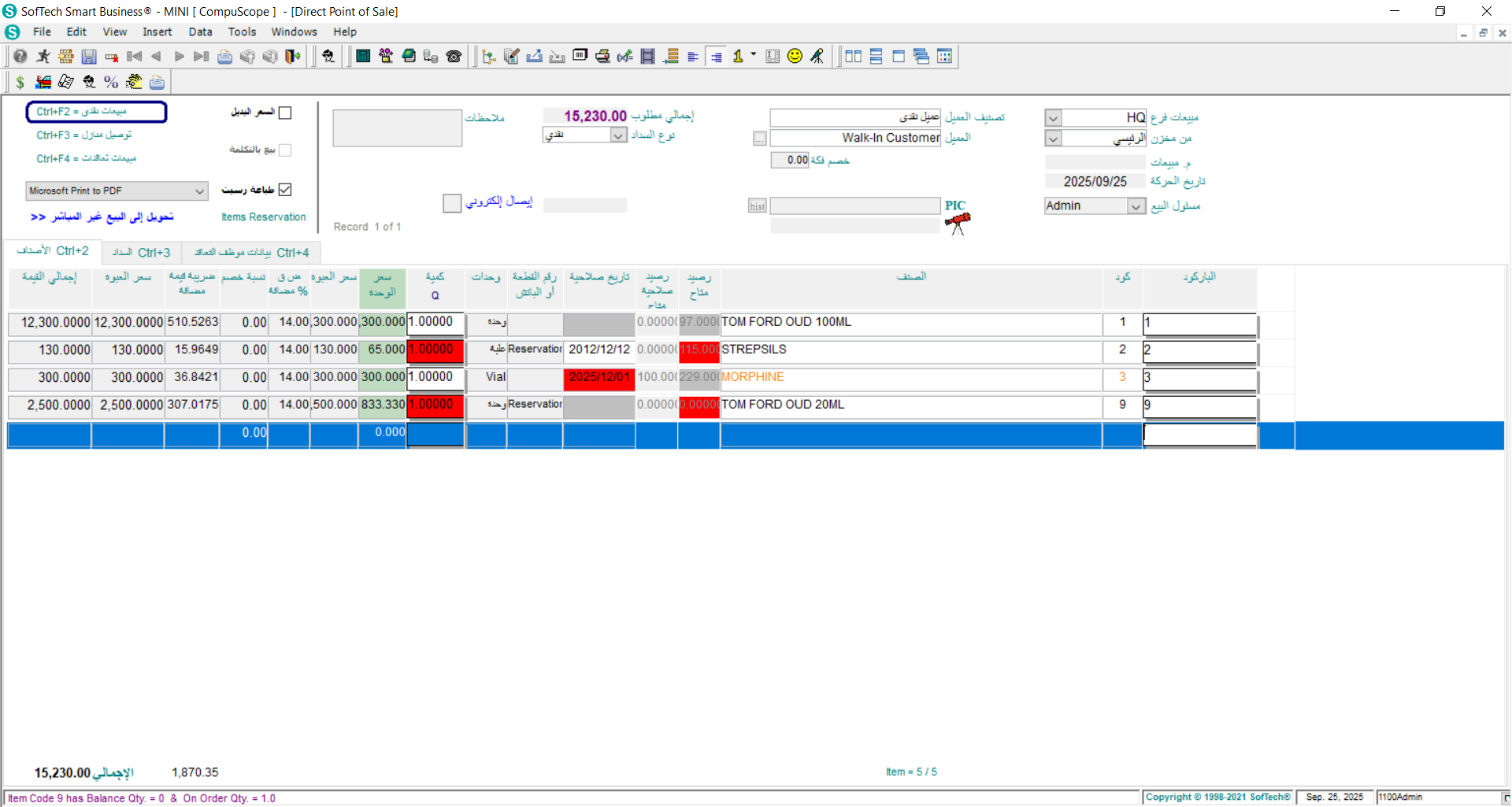
The Indirect Point of Sale is a more sophisticated, two-step workflow designed for high-volume stores or businesses requiring expert consultation (like pharmacies or electronics). In this model, the process is split:
Station A (The Consultant): The customer selects items with a staff member, who bags them and provides a transaction slip.
Station B (The Cashier): The customer takes the slip to a dedicated payment desk, pays, and receives their final sales receipt and goods.
Strategic Advantages: Beyond Logistics
Switching to an Indirect POS workflow via SofTech Smart Business offers transformative benefits for retail profitability. According to a study by the Path to Purchase Institute, for every additional minute a shopper spends browsing, the average transaction value can increase by up to 20% to 30% (Sorensen, 2009).
"By separating the 'picking' from the 'paying,' you effectively halve the density of people at any single point in the store. This prevents the 'crowded' feeling that kills the buying mindset," notes a retail implementation expert at CompuScope.
In Egypt, where retail density is high, managing crowd flow is a competitive advantage. Statistics show that 65% of shoppers are likely to abandon a purchase if they perceive the checkout line to be too long or the area too congested.
FAQ
Conclusion
Choosing between Direct and Indirect POS is not just a technical decision; it's a retail strategy. For businesses aiming to scale and improve customer experience in Egypt's competitive landscape, the Indirect model offers a proven path to higher basket sizes and better store management.
CompuScope provides expert consulting on POS workflow optimization. Contact us to find the right edition for your store.